Open Democracy: Strengthening Voter Participation
Our speaker were Oliva Zink, Executive Director of Open Democracy and Linda Bundy, the volunteer secretary for Open Democracy
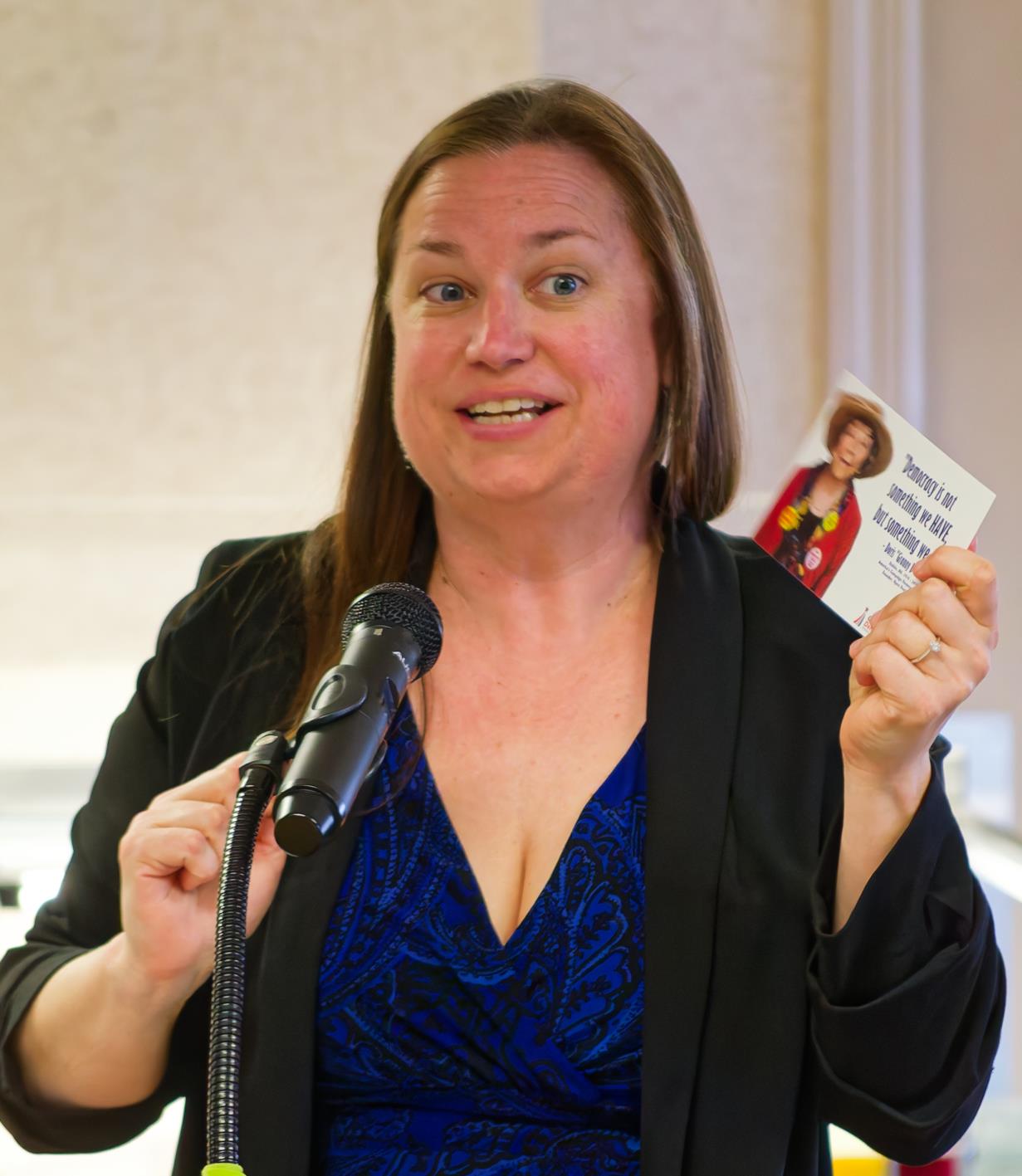
— Olivia Zink has been the Executive Director of Open Democracy since 2016 and served as the Program Director for Open Democracy since 2009. She has worked on a broad range of campaigns. Olivia also spent a year in Bolivia working with the Democracy Center. In 2008, she was named one of New Hampshire’s “40 under 40,” by the NH Union Leader. She is a graduate of the University of New Hampshire with a degree in Political Science and a minor in Sustainable Living, and a graduate of Southern New Hampshire University with a master’s degree in Community Economic Development
Olivia Zink
— Linda Bundy is a retired educator who worked for twelve years as a paraprofessional with students ranging from preschool to eighth grade. She then returned to college to earn certification in elementary and special education, and taught for sixteen years at Great Brook School in Antrim. For the first few years of retirement she was fortunate to have the time to be able to help elderly family members who needed assistance. After that, when considering the next chapter in her life, she felt that it was imperative to participate in actions striving to counteract those who are working to manipulate democracy to advantage the few at the expense of the majority of our citizens. One of Linda’s mentors during her educational career said that good special education is simply good education, and it benefits all students. Similarly, real democracy is a system of government that operates for all of its people. Volunteering with Open Democracy Action provides her with ways to work toward making our democracy function as it should.
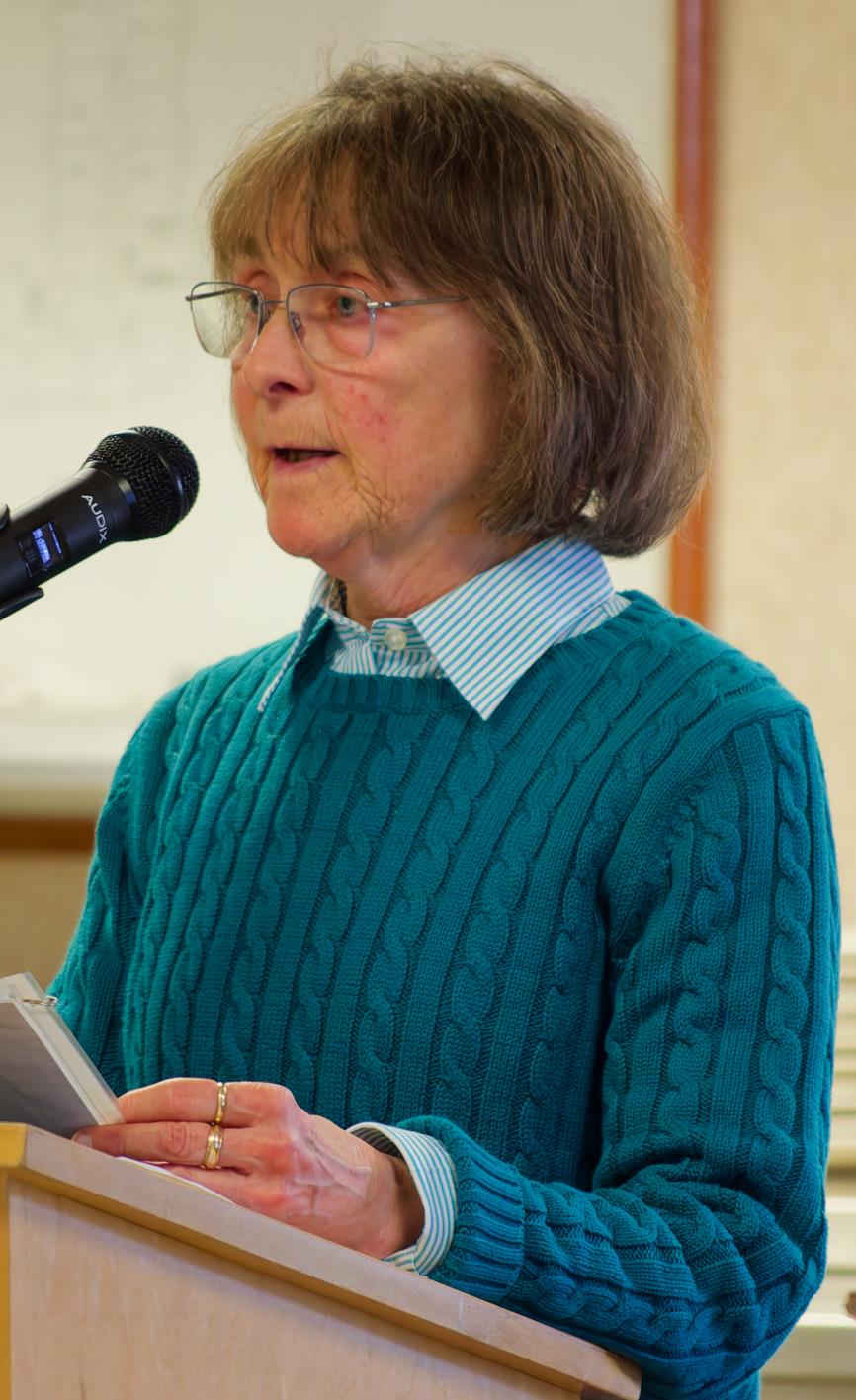
Linda Bundy
Oliva began the presentation by talking about the relationship between Rotary’s 4-Way Test, and how it relates to Open Democracy’s mission.
Open Democracy is a nonpartisan 501(c)(3) organization founded in 1997 by campaign finance reform activists. Our mission is an equal voice for all, achieved by reducing the influence of money in politics, protecting the freedom to vote, and ensuring fair redistricting.
The outcome of the Supreme Court decision in Citizens United v. FEC (2010) brought more imbalance to our political system, given a bigger voice to wealthy special interests, and eroded our campaign finance laws.
The Citizens United decision granted corporations and unions the right to spend unlimited money in elections. As a result, special interest groups across the partisan divide have invested billions of dollars to shape the national debate and determine who gets elected to public office.
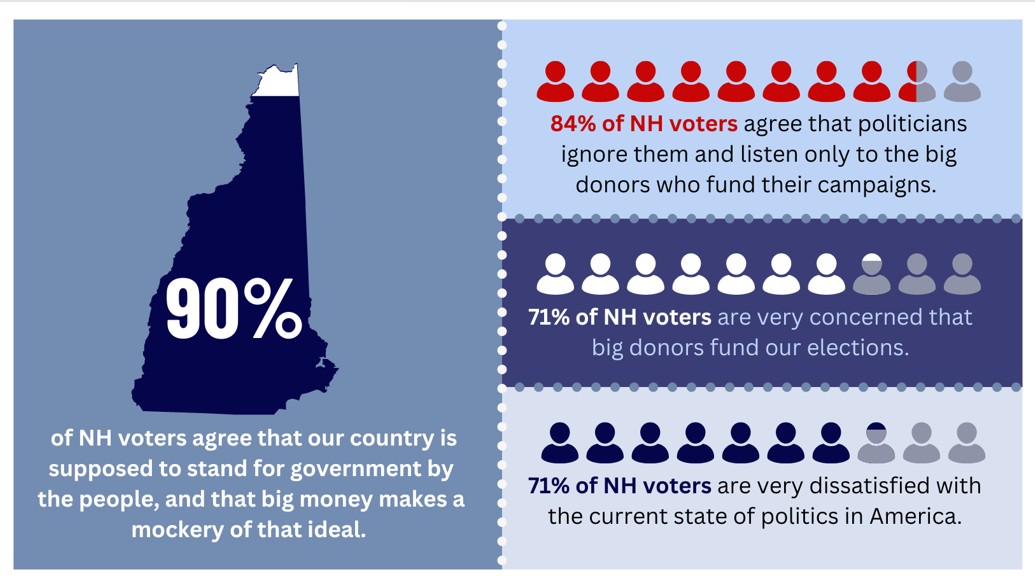
They shared this slide that outlined NH Voter beliefs:
One outcome of the Citizens United decision is that our public officials must focus their attention on the task of raising money–and the needs of the wealthy few who fund campaigns–rather than serving the needs of everyday voters. Meanwhile, the majority of American citizens are effectively excluded from politics because they cannot afford to fund campaigns or seek elected office, and tens of millions more face outright disenfranchisement at the polls.
Open Democracy’s goals for reform to achieve political equality for all:
1. Establish small donor, voter-owned honest elections
2. End gerrymandering and modernizing voting
3. Eradicate Super PACs & neutralize Citizens United
4. Expose unlimited, anonymous Secret Money
5. Eliminate Pay-to-Play lobbyist & contractor donations
6. Enforce campaign finance laws & close loopholes
What’s Happening at the NH State House?
Olivia and Linda shared that this year election law has seen over 100 bills
Many of these impacting your freedom to vote with a major focus in three key areas:
- Absentee Ballots
- Voter ID Requirements
- Targeted Attack on Undeclared Voters and Student Voters
Recent Comments